A complex password generator does not just add symbols to a word you already know. Instead, real complexity comes from randomness and length, not from swapping a letter for a number. Most people who type “P@ssw0rd123!” believe they have created something complex, when that exact pattern already sits inside cracking dictionaries used by attackers. This guide explains what actually makes a password complex, why complex and unique are not the same thing, and how to generate something that holds up in practice rather than just in appearance.
You will find the real difference between looking complex and being complex, plus a short process for generating a password that gets both right.
What “Complex” Actually Means
A password generator creates complexity through randomness, not through familiar substitution tricks. Swapping an “a” for an “@” or a capital letter at the start feels complex to a human eye. However, attackers have known these patterns for years, and modern cracking tools check for them automatically. That kind of complexity adds almost nothing against a real attack. It only slows down a person guessing by hand, not the software doing the actual work.
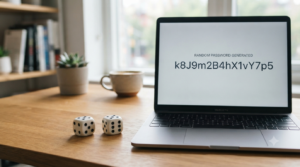
Genuine complexity comes from unpredictability. A password generator selects each character independently, with no pattern connecting one choice to the next. Because there is nothing to guess based on habit or convention, a truly random string resists the shortcuts attackers rely on. Length still matters more than any single trick, but randomness is what makes that length count for something. Without it, even a long password can fall to a tool built around common human habits.
Complex and Unique Are Not the Same Thing
These two words get used interchangeably, but they protect against different risks. A complex password resists guessing for any single account. A unique password protects you when one account gets breached, since the same password cannot be reused to unlock anything else you own. Neither property covers for the other, no matter how strong it looks on its own. Most people assume one implies the other, and that assumption is exactly where the risk hides.
You need both properties at once, not one instead of the other. A complex password reused across ten accounts still fails the moment one of those ten sites leaks its user database. Meanwhile, a unique password that is short and predictable still falls quickly to a direct guessing attempt. A password generator solves both problems together, since every result is both random and different from the last one it created. Neither property needs to be sacrificed for the other when a generator handles both at once.
How a Password Generator Creates Real Complexity
A generator pulls from the full range of available characters, including uppercase letters, lowercase letters, numbers, and symbols, without favoring any particular pattern. Nothing about the result reflects a real word, a keyboard pattern, or a common substitution. That is the entire point. Every character earns its place through chance alone, not through a rule a human decided felt secure. This is the core difference between a generated password and one someone typed from memory.
Compare that to how most people build a password by hand. They start with a memorable word, capitalize the first letter, then tack on a number or symbol at the end. A complex password generator skips that entire process. Every character exists independently of the others, which is exactly what makes the result resistant to the pattern matching that cracking tools depend on. There is no starting word to reverse engineer in the first place, since none was ever used to begin with.
How to Generate a Truly Complex and Unique Password
Getting both properties right takes only a few steps, and skipping any of them weakens the result. The order matters less than making sure every step happens at all.
- Open a free password generator and set the length to at least sixteen characters.
- Enable uppercase, lowercase, numbers, and symbols, rather than relying on just one or two character types.
- Generate a fresh result for every account, instead of reusing or slightly modifying an old password.
- Check the target site’s rules, since some forms limit certain symbols or maximum length.
- Save each password in a password manager immediately, so uniqueness does not depend on your memory.
Following these steps for every new account, rather than only the ones that feel important, is what actually keeps you protected over time. Skipping this process for a “throwaway” account is often exactly how a breach starts spreading to accounts that matter more. A single weak link is usually all it takes.
Common Mistakes When Trying to Make a Password “Complex”
These mistakes create the appearance of complexity without the substance behind it. According to the NIST digital identity guidelines, forced complexity rules often push people toward exactly these predictable patterns instead of preventing them. Recognizing them in your own passwords is the first step toward fixing the problem, since most people have at least one of these habits somewhere.
- Swapping common letters for symbols, such as an “@” for an “a” or a “0” for an “o,” since attackers check for this automatically.
- Capitalizing only the first letter of a password, a pattern common enough that it barely counts as randomness.
- Adding a number or symbol only at the very end, rather than distributing complexity throughout the entire password.
- Reusing a “complex” password across several accounts, which erases the benefit the moment one account is breached.
- Basing the password on a real word at all, even with substitutions applied on top of it.
Why “Complex” Became the Wrong Word to Focus On
Security advice spent years telling people to make passwords “complex,” and the word stuck even after the advice behind it changed. Complexity rules were meant to prevent easy guessing, but they mostly taught people the same handful of tricks. Almost everyone learned to capitalize a letter and add a symbol, which means almost everyone’s “complex” password follows a similar shape. Because so many people learned the same lesson, the lesson itself became the vulnerability.
A password generator sidesteps this entire problem by never learning the shortcut in the first place. It has no habit to fall back on and no shortcut to reach for under pressure. That absence of habit is precisely what makes its output harder to predict than anything a person builds by hand, no matter how many rules they try to follow. Therefore, the safest password is often the one nobody, including you, could have predicted in advance.
Frequently Asked Questions
Is a complex password generator different from a regular one?
Not really, since most password generators already produce complex results by default. Instead, the label mainly reflects what people search for, rather than a distinct type of tool.
Does adding symbols always make a password more complex?
Only if the symbols are placed randomly rather than following a predictable pattern. A symbol tacked onto the end of a familiar word adds far less protection than most people assume.
Can a password be complex but still weak?
Yes, if it follows a common substitution pattern or reuses a real word as its base. Complexity without genuine randomness looks strong but often is not, since attackers have seen the same tricks many times before.
Is a long passphrase as complex as a random character string?
They protect you in similar ways, as long as the passphrase uses truly random words rather than a memorable phrase. Length matters more than the specific format you choose, and either approach can reach the same practical strength.
How do I know if my current password is actually complex?
If you can explain the pattern behind it, such as a word with a number at the end, it is probably not complex in any meaningful sense. A password generated randomly has no explainable pattern at all, which is exactly the point.
Why do complexity requirements sometimes lead to weaker passwords?
Forced rules push people toward the smallest change that satisfies them, such as adding one symbol at a fixed spot. This creates predictable patterns across many users, which attackers learn to expect and check for automatically.
Generate Something Complex and Unique Today
Real complexity has nothing to do with how a password looks and everything to do with how it was created. A password generator solves both complexity and uniqueness at once, without asking you to remember a clever substitution trick. That single shift in approach, more than any individual habit, is what actually closes the gap between feeling secure and being secure. It also means one fewer thing to remember or invent on your own. The next password you create can finally be one you trust for the right reasons.
Try this password generator now to create something truly random for your next account. For more on how length affects strength, see Is a 12 Character Password Actually Long Enough Today. If you would rather use a passphrase instead of a character string, The Passphrase Trick That Makes Passwords Easy to Recall covers that option in detail. Either format beats anything built by hand, one substitution at a time.