In 1994, a small engineering team at a Japanese automotive parts company solved a problem that nobody outside their factory particularly cared about. Thirty years later, their solution is on restaurant tables, product packaging, billboards, and boarding passes in almost every country on earth. The QR code did not start as a marketing tool or a tech trend. It started as a faster way to count car parts.
Here is the full story of who invented the QR code, why they built it, and how it quietly became one of the most widely used technologies in the world.
What Does QR Stand For?
QR stands for Quick Response. The name reflects exactly what the inventors wanted: a code that a scanner could read and decode almost instantly, far faster than the barcode systems in use at the time. A traditional barcode holds data in one direction only. Quick Response codes store data in two dimensions, which is why you will also hear them called 2D barcodes.
The name was chosen deliberately to emphasise speed. In a factory environment processing thousands of components per shift, every second of scanning time adds up. Quick Response was not just a catchy label. It was a functional promise.
Who Invented the QR Code?
Masahiro Hara, a engineer at Denso Wave Incorporated, invented the QR code in 1994. Hara led the development team that created the format, and his name appears on the original patent. Denso Wave was a subsidiary of Denso Corporation, which itself was part of the Toyota Group supply chain.
The team included several engineers working under Hara, and the project took roughly two years of development before producing a format that met their requirements. Hara has spoken in interviews about drawing inspiration from the game of Go, a Japanese board game that uses black and white stones on a grid. The visual similarity to a Go board influenced the module-based design that makes QR codes look the way they do.
To understand how that grid of black and white squares actually encodes and decodes information, the guide to how QR codes work walks through the entire process in plain language.
Why Was the QR Code Invented?
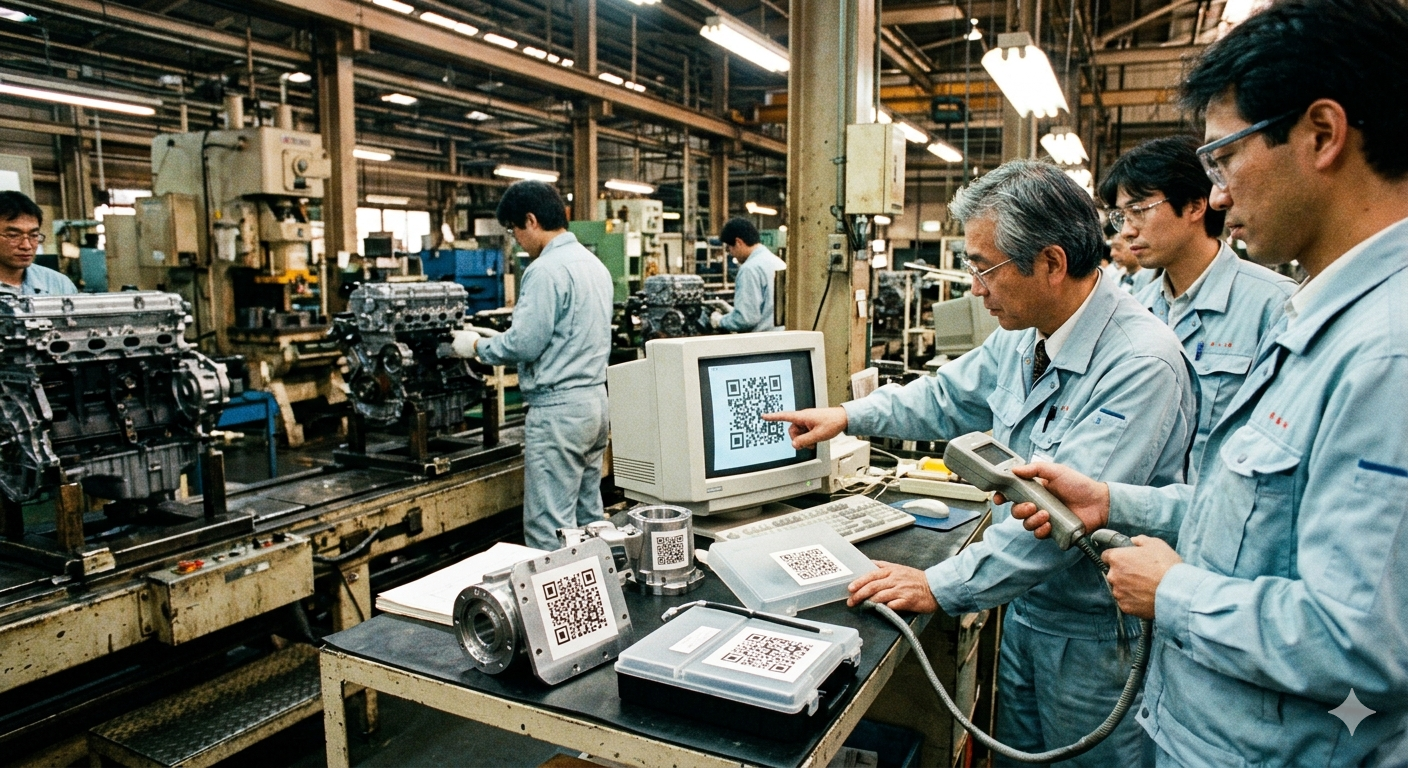
The problem Hara’s team faced was straightforward. Denso Wave’s factories used standard barcodes to track automotive components moving through production lines. Each barcode held limited data, so workers needed to scan multiple codes on a single part to capture all the information they needed. That process slowed everything down.
Traditional barcodes also required precise alignment. The scanner had to point directly at the code from the correct angle. In a busy manufacturing environment with fast-moving parts, that constraint created errors and delays. The team needed something that could hold far more data, scan from any angle, and read correctly even if part of the code got damaged or dirty during handling.
Those three requirements shaped every design decision Hara’s team made. More data capacity led to the two-dimensional grid structure. Omnidirectional scanning led to the three distinctive square markers in the corners, which allow the reader to determine the code’s orientation instantly regardless of angle. Error correction led to the redundancy system built into the pattern, which lets a QR code remain readable even when up to 30 percent of it is obscured or damaged.
When Was the QR Code Invented?
Denso Wave developed the QR code format in 1994 and released it publicly that same year. Crucially, Denso Wave chose not to exercise its patent rights. The company made the QR code format openly available for anyone to use without licensing fees. That decision, more than any single technical feature, explains how QR codes spread so widely and so quickly across industries well beyond automotive manufacturing.
By making the format free to implement, Denso Wave removed every commercial barrier to adoption. Developers, manufacturers, retailers, and eventually app makers could all build QR code support into their products without paying anyone anything. The open standard approach is directly responsible for the format’s global reach today.
How QR Codes Moved from Factory Floors to Everyday Life
For the first decade after their invention, QR codes stayed largely within industrial and logistics environments in Japan. Manufacturers used them for parts tracking, inventory management, and supply chain documentation. The technology worked well in those settings, but consumer adoption needed one more piece of infrastructure: smartphone cameras capable of reading them without dedicated hardware.
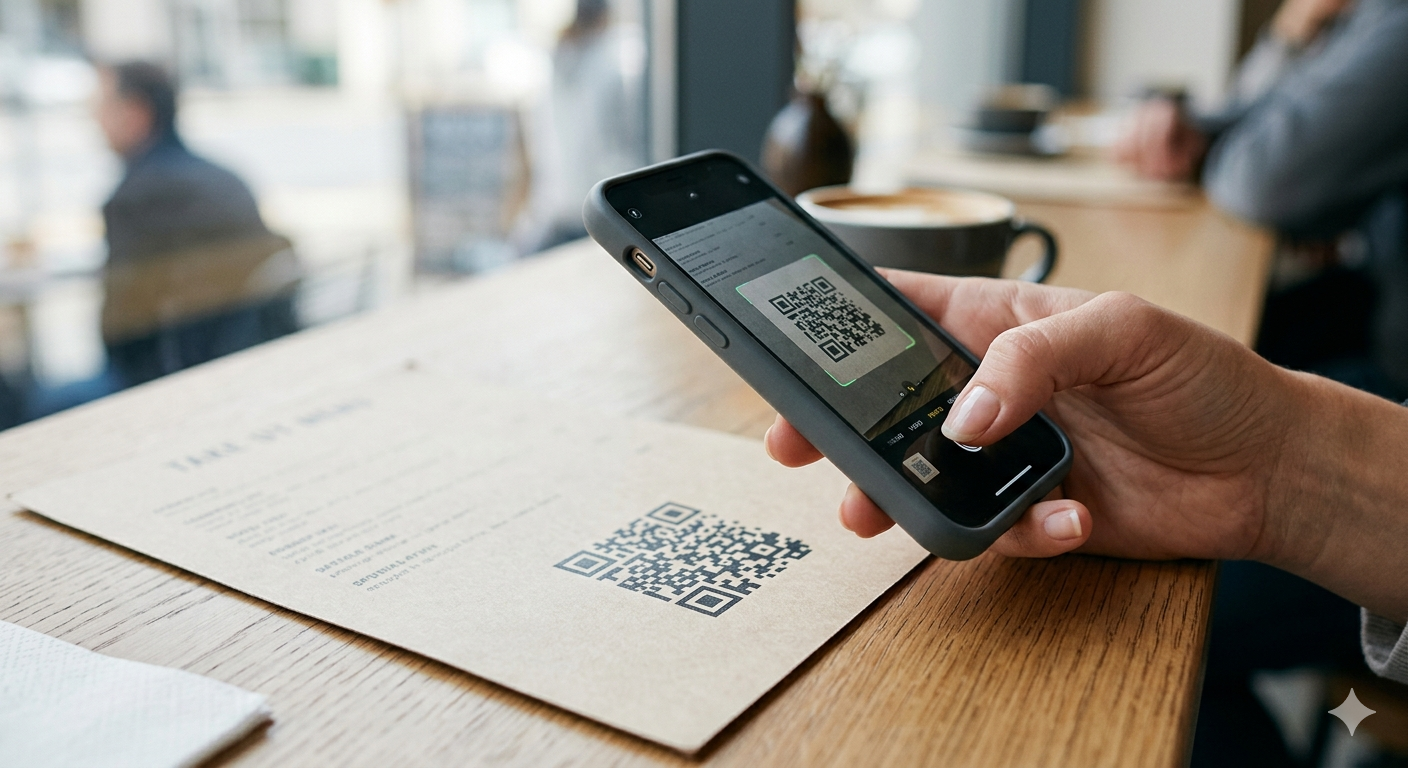
Japan led the early consumer adoption curve. By the early 2000s, Japanese mobile phones with built-in QR readers allowed consumers to scan codes on product packaging, magazine ads, and posters to access URLs, contact details, and promotional content. The rest of the world followed much more slowly, largely because early smartphones outside Japan lacked native QR scanning capability and required separate apps.
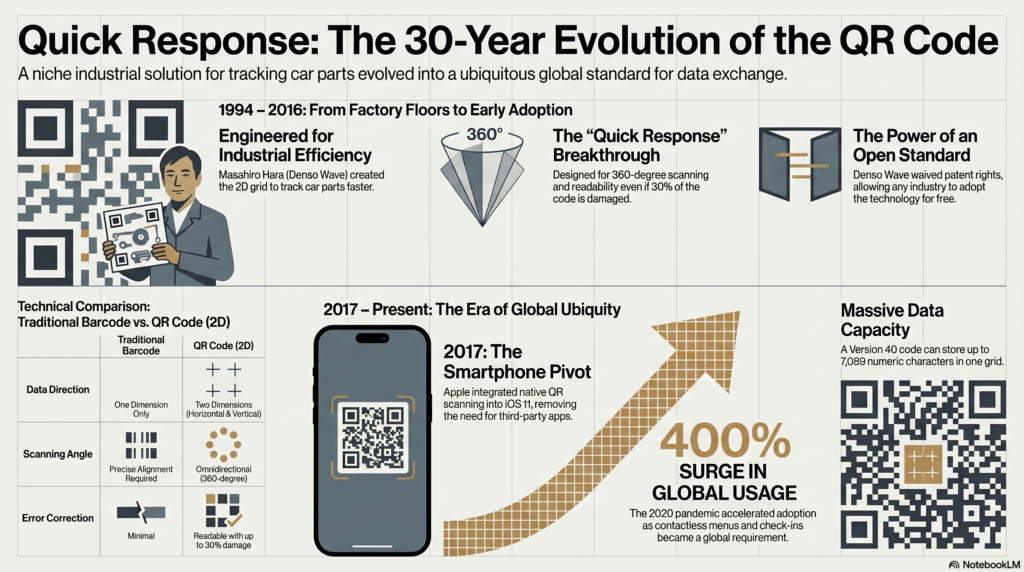
The turning point for global adoption came in two stages. First, Apple added native QR code scanning to the iPhone camera with iOS 11 in 2017, removing the need for a separate app entirely. Then the COVID-19 pandemic in 2020 accelerated adoption dramatically as restaurants, venues, and businesses worldwide replaced physical menus and materials with contactless QR alternatives practically overnight.
By 2022, QR code scans had grown by over 400 percent compared to pre-pandemic levels, and the format had fully crossed over from a niche industrial tool to mainstream daily use. Today, billions of QR codes circulate across marketing materials, payments, transport systems, retail packaging, and healthcare documentation worldwide.
If you want to create your own QR code and join that ecosystem, the QR code generator lets you build a fully customised code in under a minute, with options for colour, logo, format, and resolution.
Interesting QR Code Facts Worth Knowing
- Masahiro Hara’s team at Denso Wave spent roughly two years developing the format before releasing it in 1994
- The three square finder patterns in the corners were specifically designed so scanners could detect orientation at any angle
- QR codes support four error correction levels, with the highest level allowing the code to remain readable even when 30 percent of it is damaged
- Denso Wave holds the patent but chose not to enforce it, making QR codes a free open standard from the beginning
- The format supports multiple data types including text, URLs, contact information, WiFi credentials, and payment data
- A Version 40 QR code can store up to 7,089 numeric characters or 4,296 alphanumeric characters in a single code
- Japan was the first country to see widespread consumer QR code adoption, nearly two decades before the rest of the world caught up
QR Code History: A Brief Timeline
| Year | Event |
|---|---|
| 1994 | Masahiro Hara and his team at Denso Wave invent and release the QR code format |
| 1994 | Denso Wave makes the format freely available without enforcing patent rights |
| Late 1990s | QR codes spread across Japanese manufacturing and logistics industries |
| Early 2000s | Japanese mobile phones with built-in readers drive first consumer adoption |
| 2010s | Smartphone adoption grows globally but QR usage outside Japan remains limited |
| 2017 | Apple adds native QR scanning to iPhone camera with iOS 11 |
| 2020 | COVID-19 pandemic triggers mass adoption of contactless QR menus and check-ins worldwide |
| 2022 onwards | QR codes become standard in payments, marketing, retail, healthcare, and transport globally |
What Is a Quick Response Code?
A Quick Response code is a two-dimensional matrix barcode that stores data as a pattern of black and white squares arranged on a grid. Unlike a traditional barcode, which encodes information in one direction only, a QR code encodes data both horizontally and vertically. This allows it to store significantly more information in a smaller physical space.
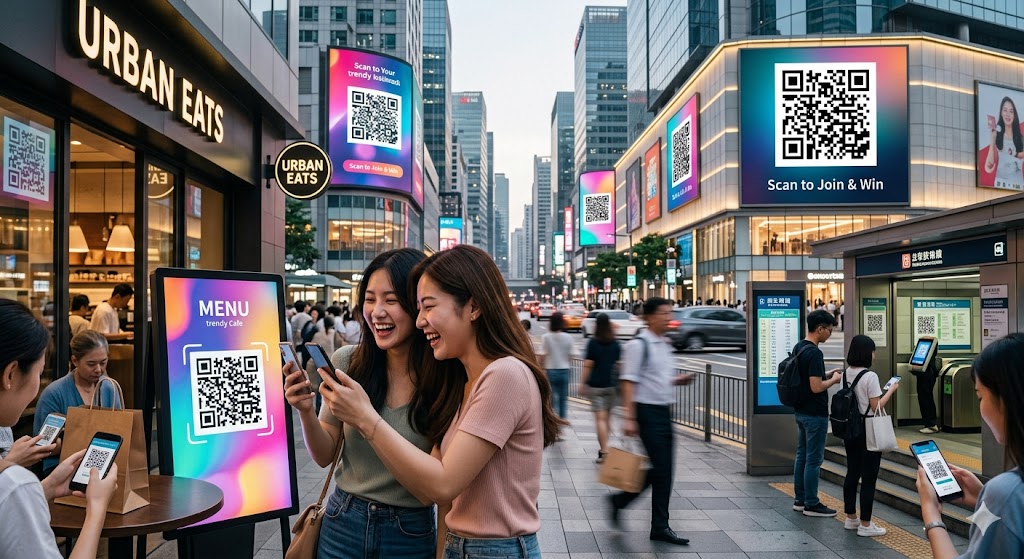
When a camera scans the code, software identifies the three finder patterns in the corners to determine orientation, then reads the module grid to extract the encoded data. The entire process takes a fraction of a second, which is exactly what the name Quick Response was designed to describe. For a deeper look at the mechanics behind this process, the complete guide to what a QR code is covers the structure, capacity, and everyday uses in full detail.
Frequently Asked Questions
Who invented the QR code?
Masahiro Hara, an engineer at Denso Wave Incorporated in Japan, invented the QR code in 1994. Hara led the development team that created the format to solve a parts-tracking problem in automotive manufacturing. Denso Wave holds the patent but chose to make the format freely available without licensing fees.
When was the QR code invented?
Denso Wave invented and released the QR code in 1994. The development process took roughly two years before the team produced a format that met their requirements for data capacity, omnidirectional scanning, and error correction.
What does QR stand for?
QR stands for Quick Response. The name reflects the original design goal: a code that scanners could read and decode almost instantly, much faster than the barcode systems in use at the time.
Why did Denso Wave make QR codes free to use?
Denso Wave held the patent on the QR code format but chose not to enforce it, making the technology freely available for anyone to implement without paying licensing fees. That decision removed every commercial barrier to adoption and directly enabled the format’s spread across industries and countries worldwide.
What problem did the QR code originally solve?
The QR code solved a parts-tracking problem in automotive manufacturing. Traditional barcodes held too little data, required precise scanning alignment, and slowed down production lines. Denso Wave’s team needed a format that held more data, scanned from any angle, and remained readable even when partially damaged.
When did QR codes become popular worldwide?
QR codes gained widespread global adoption in two stages. Apple’s addition of native QR scanning to the iPhone camera in 2017 removed the need for separate apps. Then the COVID-19 pandemic in 2020 pushed mass adoption as businesses worldwide switched to contactless QR alternatives for menus, check-ins, and information sharing.
What is Denso Wave?
Denso Wave Incorporated is a Japanese technology company and subsidiary of Denso Corporation, which is part of the Toyota Group supply chain. The company invented the QR code in 1994 and continues to develop barcode and auto-ID technologies today.
The Bigger Picture
A small engineering team in a Japanese factory spent two years solving a problem most people never knew existed. The result became one of the most recognised symbols on the planet. The QR code’s journey from automotive parts tracking to global everyday use is a genuinely interesting story about open standards, timing, and the kind of slow-burn adoption that eventually tips into ubiquity.
Now that you know where QR codes came from, you can start putting them to work. The QR code generator gives you everything you need to create a professional, customised QR code for any purpose, from business cards and menus to marketing campaigns and event materials.