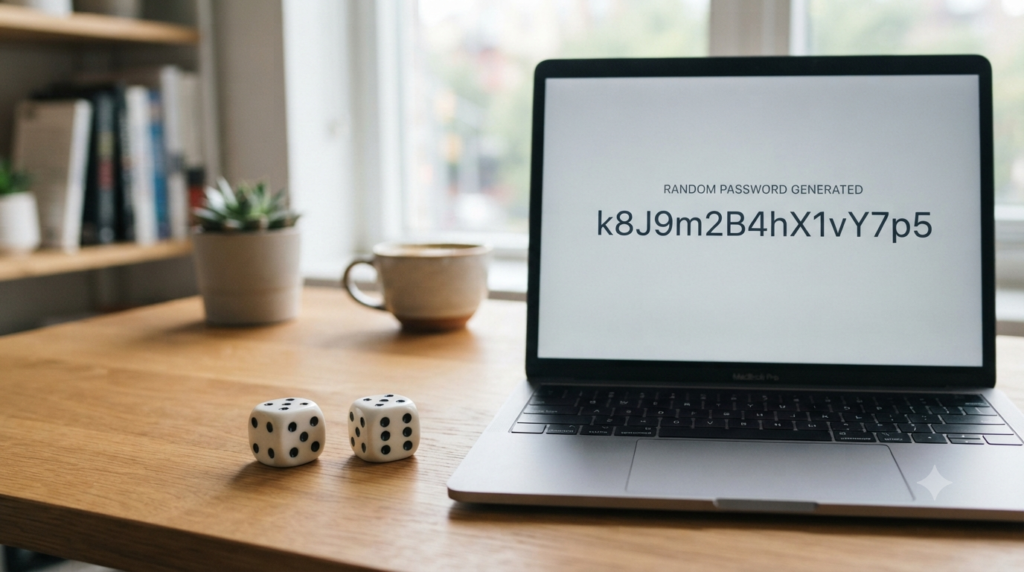
A random password generator, a strong password generator, and a secure password generator get treated as the same search by most people, but the three words describe truly different things. Random refers to the method behind a password. Strong refers to a property of the result itself. Secure describes something much broader than the password alone. Understanding the difference clears up a surprising amount of confusion around what actually protects an account.
This guide breaks down what each term actually means, how they relate to each other, and why treating them as interchangeable can leave real gaps in how you think about protection.
What Random Actually Means in This Context
Random describes the process that creates a password, not how the result looks to a human. A random password generator picks each character without any pattern connecting it to the last one, using a method that does not favor any outcome over another. Instead, this differs sharply from a person trying to type something that merely looks unpredictable. A human brain simply cannot replicate this kind of process on demand, no matter how hard it tries to.
People are consistently bad at producing genuine randomness on their own, even when they try. Instead, a password generator solves this by removing human judgment from the selection process entirely. The output might look messy or might look oddly clean, but the method behind it is what actually makes it random, not the appearance of the result. Two equally random passwords can look completely different from each other by pure chance, and that is entirely expected.
What Strong Actually Measures
Strong describes a property of the finished password, specifically how resistant it is to guessing. Instead, this depends mainly on two things. How long the password is, and how random the selection process behind it actually was, both matter. A long password built from a predictable pattern is not strong, even if it looks complicated at a glance. Anyone searching for a random password generator to protect a real account should keep this distinction in mind, since the two concepts blend together in casual conversation.
Randomness and strength are related but not identical. Instead, a password generator produces randomness through its method, and that randomness is what allows the result to be strong. Strength is the outcome. Randomness is the process that makes the outcome possible in the first place. One cannot exist without the other in any meaningful sense, since they describe two sides of the same process working together.
What Secure Covers That the Other Two Don’t
Secure describes something broader than the password by itself. It includes how the password gets transmitted, how it gets stored on the other end, whether the site hashes it properly, and whether other protections like two factor authentication exist alongside it. A password can be both random and strong while the overall system around it remains far from secure. The word covers the entire chain, not just the one link you personally control directly at any given moment in time.
Because of that, a strong, random password does not protect you from a site that stores passwords carelessly, transmits them without encryption, or gets breached through an unrelated vulnerability. Security is a property of the whole situation, not something a password alone can guarantee on its own. The password is just one input into a much larger system. Many other moving parts exist beyond your direct control. This is exactly why the word secure covers so much more ground than the password alone.
Why All Three Matter Together
Randomness is what makes strength possible in the first place, since a predictable method cannot produce a truly strong result no matter how long it runs. Strength is what your password specifically contributes to the broader picture of security. Neither one substitutes for the other, and neither one guarantees the third. Each word describes a distinct link in the same overall chain, and none of them can substitute for the others.
Instead, a fully secure setup needs all three working together. Generate a password randomly so it can be strong. Use that strength on an account you also protect through good practices like two factor authentication, and choose services that handle passwords responsibly on their end. Missing any one piece leaves a real gap the others cannot fill on their own, no matter how well each individual piece performs by itself. All three deserve equal attention rather than picking just one to focus on.
Common Confusions These Terms Create
These mix ups tend to happen because the three words describe closely related ideas. They still remain truly distinct from each other in practice.
- Assuming a password that looks random to the eye must have come from a truly random process, when a person can imitate randomness poorly.
- Treating a tool branded as a secure password generator as a guarantee that your entire account is now secure.
- Believing length alone makes a password strong, without accounting for whether the characters were actually chosen at random.
- Assuming a strong password compensates for weak practices elsewhere, such as reusing it across several accounts.
Keeping the three words separate in your own thinking clears up most of this confusion right away, before it leads to a real mistake. A little precision with language goes a long way toward better habits overall, especially when comparing different tools or reading their marketing claims. That small habit pays off the next time you evaluate any password related product.
Why Marketing Language Blurs These Words Further
Instead, password generator tools often brand themselves using whichever word tests best with visitors, regardless of which one most accurately describes what the tool actually does. A tool calling itself secure might only be describing its random generation method. One calling itself strong might say nothing at all about how it stores results afterward. Marketing teams pick whichever word sounds most reassuring rather than the one that describes the tool most precisely to a technically informed audience reading closely and carefully.
Instead, reading past the marketing label and checking what a tool actually does gives a clearer picture than the branding alone ever could. The underlying method matters far more than which word ended up in the tool’s name. Checking a tool’s actual behavior, rather than trusting its label, is worth the extra minute every time. That small habit avoids most of the confusion this branding creates in the first place.
Frequently Asked Questions
Is a random password always a strong one?
Usually, but length still matters alongside randomness. A short random password is weaker than a long one. Both come from the exact same random underlying process either way.
Does using a secure password generator make my account secure?
Not by itself, since security depends on more than the password alone. It also depends heavily on how the site stores and transmits that password afterward.
Why do people confuse random with strong?
Because a random password is usually strong, the two terms get used interchangeably in everyday conversation. Randomness is actually the method, while strength is the resulting property it produces from that same underlying process.
Can a password be strong without being random?
Not reliably, since a predictable method tends to produce guessable results even at a longer length. According to the NIST digital identity guidelines, genuine randomness is central to real password strength and cannot be substituted with length alone.
What else does security depend on besides the password itself?
Two factor authentication, how a site hashes and stores passwords, and whether that site has recently experienced a breach all factor in as well. A strong password is one piece of a much larger picture that extends well beyond your own control.
Should I check whether a service handling my passwords has been breached?
Yes, checking a resource such as Have I Been Pwned takes only seconds and reflects the security side of this equation directly, separate from your password’s own strength. This kind of check costs nothing and takes less time than most password resets do.
Use All Three Words Correctly, Not Interchangeably
Random describes the method, strong describes the result, and secure describes the whole picture surrounding both. Keeping these three ideas separate helps you see clearly what a password generator actually gives you, and what it never claimed to provide in the first place. None of these words are interchangeable once you understand what each one actually measures on its own terms. Carrying that distinction forward makes every future conversation about passwords a little more precise and a lot less confusing overall.
Try this password generator now to create something truly random and strong. For more on how length affects strength specifically, see The Real Reason 16 Characters Comes Up So Often Today. For the storage half of the security picture, Your Encrypted Password Is Probably Not What You Think covers what happens after you generate one and where that password goes from there onward, once it leaves your hands entirely.